Expert guide to the best UK online casinos with Microgaming slots in 2026, including top-ranked operators, bonus analysis, game RTPs, and regulatory advice. Compare top Microgaming casinos
Expert guide to the best UK online casinos with Microgaming slots in 2026, including top-ranked operators, bonus analysis, game RTPs, and regulatory advice. Compare top Microgaming casinos
Discover the top UK online casinos for NetEnt slots in 2026. Compare trusted operators, bonuses, RTPs, and fast payouts in our no-nonsense expert guide. read our guide to the best NetEnt casinos UK
A no-nonsense guide to the best UK online casinos offering NoLimit City slots in 2026. Compare top operators, bonuses, RTPs, and mobile experience. Play smarter, not harder. read the guide to the best online casinos with nolimit city slots uk 2026
An honest guide to the best UK online casinos offering Play'n GO slots in 2026. Compare licensed operators, bonus terms, payout speeds, and the full catalogue of games from Book of Dead to Agent of Hearts. see our list of top Play'n GO casinos
Find the top UK online casinos for Push Gaming slots in 2026. Compare bonuses, RTPs, and mobile features. Play popular titles like Jammin' Jars safely. explore the top Push Gaming casinos in the UK
A no-nonsense guide to the best UK online casinos offering Red Tiger slots in 2026. Compare real-money operators, bonuses, RTPs, and payout speeds before you spin. best Red Tiger casinos UK
Discover the top UK online casinos offering Thunderkick slots in 2026. Compare bonuses, games, and licensing in our expert guide. best Thunderkick casino sites UK
Find the best UK online casinos for Yggdrasil slots in 2026. Compare 10 licensed sites with welcome bonuses, fast payouts, and full game catalogues. Play Vikings Go Berzerk, Valley of the Gods, and more with zero fluff. read our complete Yggdrasil casino UK guide
Master the best online slots payout percentage in 2026 with our no-nonsense guide to RTP, volatility, and the casinos that actually offer high returns. Stop feeding the wrong machines. read the best online slots payout percentage guide for 2026
An honest, in‑depth guide to the best UK online casinos featuring Pariplay slots in 2026. Compare licensed sites, bonuses, payouts, and top games with expert analysis and practical tips. read the best Pariplay casinos UK guide for 2026



 02 Feb 2024
Dry eyes are a common condition, with around 17 million people in the UK thought to be suffering from the symptoms. However, there are many potential causes, some more serious than others, which make it hard to effectively diagnose and treat dry eyes to alleviate the symptoms and improve people’s quality of life.
When left untreated, dry eyes can cause issues with people’s eye health as well as affect their vision, so it’s imperative that anyone with prolonged dry eyes seek treatment from an eye specialist as soon as possible. Vitreous detachment is another common eye health problem – and one that can affect people who also have symptoms of dry eyes. But can dry eyes cause vitreous detachment?

People with dry eyes will usually have itchy, stinging or burning eyes, sometimes red in appearance and occasionally very watery. The condition can be irritating, causing people to blink rapidly and regularly but without relief, and in severe cases, it can be very painful and affect people’s vision. So, since there are varying symptoms, there are also a range of possible causes.
Essentially, dry eyes are the lack of tears, causing people’s eyes to feel dry and not be effectively cleaned by blinking and tear drainage. But for some people, dry eyes are caused by poor-quality tears.
Tears are a mixture of water, lipids, proteins, electrolytes and mucin produced in the lacrimal gland, the Meibomian gland and the conjunctival membrane to coat your eye in a cleansing antibacterial liquid and keep your eyes moistened. The tears clear your eyes of dust, dirt and debris when you blink, and the liquid is drained through the nasolacrimal duct, with larger particles collected in the mucus in the corner of your eye.
When you don’t have one or more of these substances in your tears, your eyes can feel dry and irritated while still being very watery, as your lacrimal glands overcompensate for the poor-quality tears by producing a lot of liquid.
Dry eyes can happen as a result of environmental factors such as being in air-conditioned or smoky rooms, or being exposed to cold, dry wind. But they can also be caused by other factors, conditions and medicines, including:
Dry eyes are more common as you get older, as is vitreous detachment.
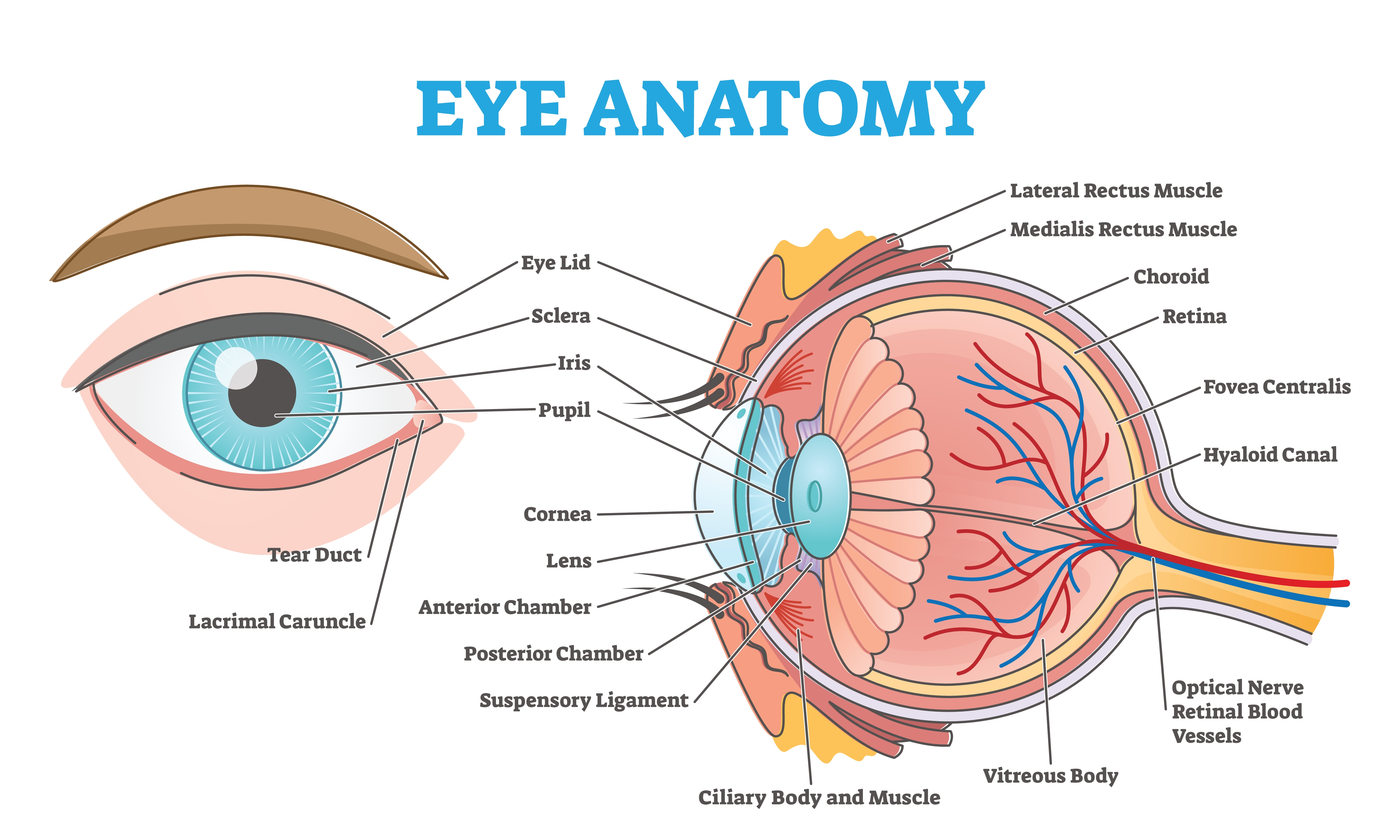
Your eye is made up of several layers and components, with the cornea on the outside, protecting your iris and pupil, the retina at the back of the eye, the optic nerve stretching from the back of your eye to your brain to send signals, and the vitreous body filling the centre of your eye.
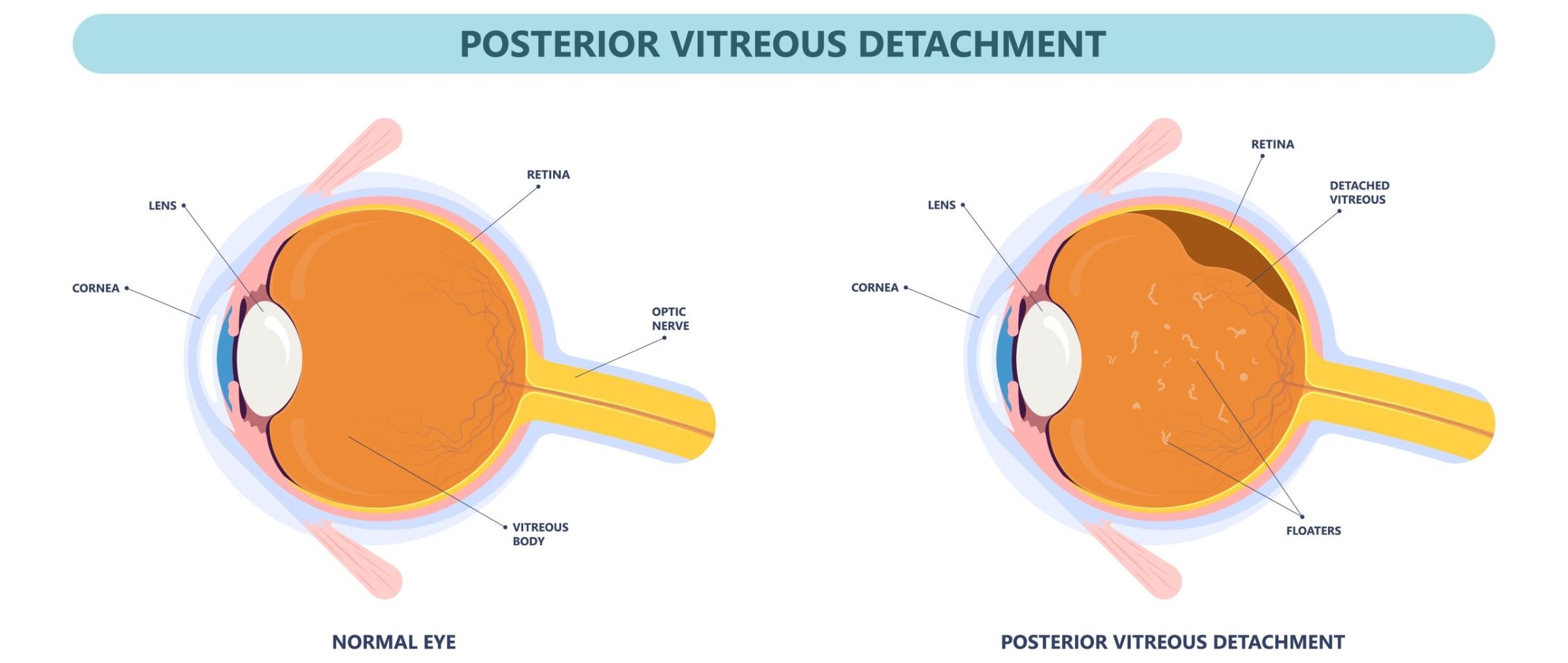
The vitreous body is made of a gel-like fluid full of tiny fibres attached to the retina and makes up the majority of the tissue in your eye, helping it to maintain its shape. As we age, the fibres in the vitreous slowly detach from the retina, causing the shape of our eyes to change and preventing light from reaching the retina, which allows us to see. If many vitreous fibres detach from the retina, you will experience severe vision impairment, and this may lead to macular holes or retinal detachment, which can lead to blindness.
People with vitreous detachment experience changes to their vision known as floaters, as lines appear to float across their field of vision. They may also experience light flashes in their peripheral vision.
If you suspect you have vitreous detachment, you should seek advice from an eye specialist, as although vitreous detachment is a natural part of ageing and cannot be treated, it may lead to another eye condition which can significantly impair your vision and require treatment.

Both dry eye syndrome and vitreous detachment occur with age, so it’s normal to consider that one may cause the other, especially as dry eyes can lead to several eye health problems. However, dry eyes cannot cause vitreous detachment.
As we get older, our high-quality tear production decreases, and the vitreous fluid forming our eye shape lessens, causing the fibres to detach from the retina; however, the two occurrences aren’t linked by anything other than ageing, and dry eyes cannot cause your vitreous body to shrink.
Dry eyes are, however, more common in women than men, as they can be caused by hormonal fluctuations, and women experience significant hormonal changes at various points in their lives, from menstruation to pregnancy and menopause. One study also suggests that PVD (posterior vitreous detachment) is more common in women over 80 than in men over 80. However, more studies need to be conducted to make any significant conclusions, and there is still no evidence that dry eyes and vitreous detachment are connected.
Dry eyes cannot lead to vitreous detachment, but they can lead to other eye complications. Without sufficient tear production, your eyes are more susceptible to infections, so prolonged dry eyes can lead to eye infections like conjunctivitis and blepharitis.
What’s more, constant irritation of the cornea due to repeated dry blinking can rub dirt and dust particles against the sensitive outer layer of tissue of the eye, causing inflammation and resulting in blurred vision or lack of ability to focus. It is highly unlikely that this will result in permanent vision loss; however, it’s important to seek treatment for dry eyes to prevent any eye health issues.
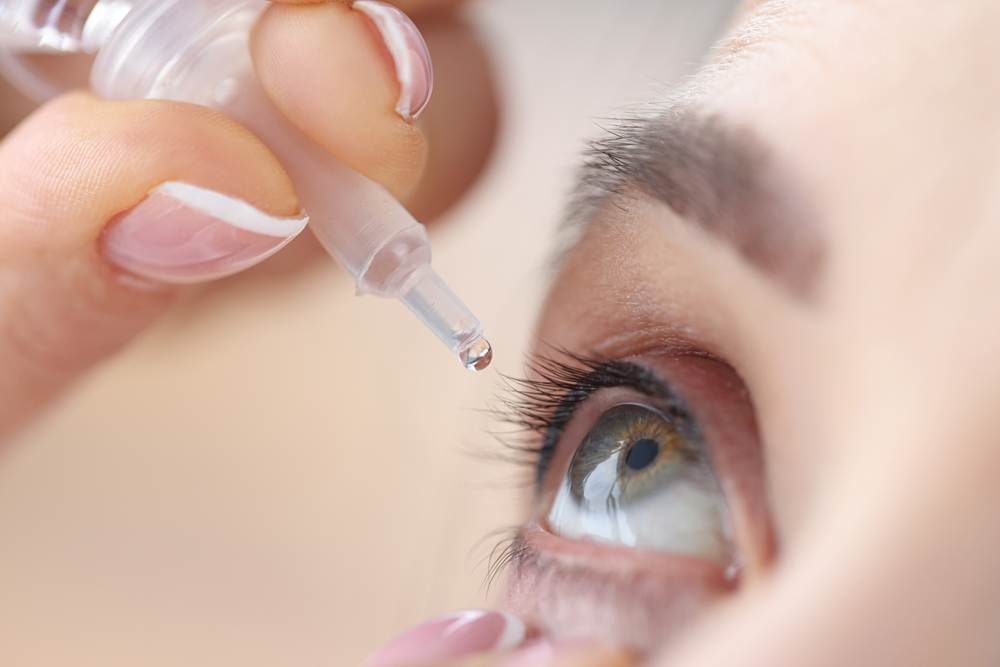
The most effective and common treatment for dry eye syndrome is the use of eye drops known as artificial tears. When dropped into the eye, they replicate the effect of tears, moistening the eye to allow for comfortable blinking and cleaning the eye of dirt and dust as the liquid is drained by the tear duct, and mucus collects the offensive particles.
However, if your dry eyes are caused by environmental or lifestyle factors, you can help relieve symptoms by making certain changes.
You should ensure you’re drinking at least 1.5 litres of water each day, ideally over 2 litres of water, to keep your body hydrated and reduce the risk of dry eyes. You should also wear glasses when out in cold and windy weather to protect your eyes, and avoid air-conditioned and smoky rooms where possible.
Strive to eat a balanced diet with plenty of omega-3 fatty oils to help produce the necessary lipids for tear production, as well as ensure you are eating a sufficient amount of vitamin A and beta-carotene to ensure healthy, moist eyes.
You can find vitamin A and beta-carotene in:
If you work regularly from a computer or laptop, you should also ensure you’re looking away from your computer screen at least every 20 minutes to give your eyes a break from the bright screen.
There is no cure for dry eyes, and everyone is likely to experience dry eyes as they get older and begin to produce fewer tears. However, if your dry eyes are caused by an environmental factor or the side effects of a medicine, you can stop the symptoms of dry eyes by making simple lifestyle changes. You may, however, begin to experience the symptoms again in later life, or during your next period of hormonal changes, whether that’s changing birth control, getting pregnant or going through the menopause.
If you have symptoms of dry eyes or vitreous detachment, you should see an eye specialist. At the Eye and Dental Clinic, we have a team of experts ready to help; book an appointment, read more on our latest news page, or simply contact us today!
Back to Blog

Discover how our advanced eye and dental treatments have helped patients see clearly, smile confidently, and live better with personalised care, comfort, and lasting results.
View More












Hemlata T
Had a deep clean today with Alla and Rachel, which was great, they were very gentle and even fixed a stubborn stain between my teeth, which they noticed during the...

Abs
Great service all around. Dr Uddin was knowledgeable, kind and put me at ease when having a chalazion removed. He helped me a lot with follow-up care for blepharitis, taking...
Amanda K
If I could give more than 5 stars for Mr J Uddin, I would. The reception staff were really polite and helpful. I had my chalazion removal surgery 2 months...
Nicole
Very satisfying. Dr J. Uddin removed a cyst on my upper lid. He explained everything to me before and during the procedure, and he has a very calming appearance. The...
Hemlata T
Had a deep clean today with Alla and Rachel, which was great, they were very gentle and even fixed a stubborn stain between my teeth, which they noticed during the...
Abs
Great service all around. Dr Uddin was knowledgeable, kind and put me at ease when having a chalazion removed. He helped me a lot with follow-up care for blepharitis, taking...
Amanda K
If I could give more than 5 stars for Mr J Uddin, I would. The reception staff were really polite and helpful. I had my chalazion removal surgery 2 months...
Nicole
Very satisfying. Dr J. Uddin removed a cyst on my upper lid. He explained everything to me before and during the procedure, and he has a very calming appearance. The...